
by Rachel Pronger
"He'll tell you what it's worth, tell you what your life is worth. He will barter your kids, your family for your night work. And as long as you're just one tiny little woman, he is bigger than you are because he owns the block… Essentially he owns you."
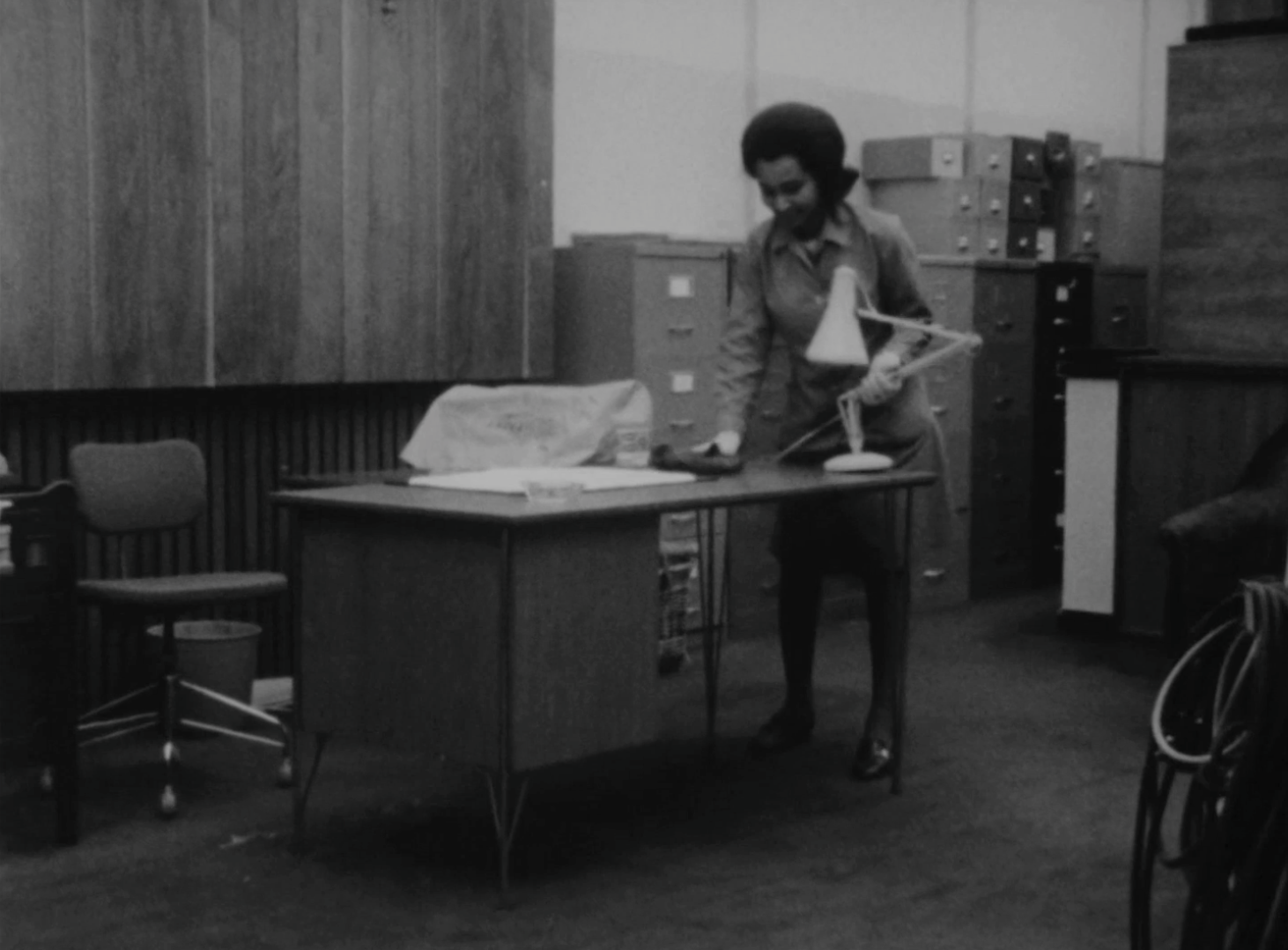
Image from Nightcleaners (1975)
It’s more than fifty years since Nightcleaners was shot, yet still it’s hard to think of another film which captures so keenly the many-stranded nature of left-wing struggle. Between November 1970 and July 1972, members of the Berwick Street Collective (Marc Karlin, Mary Kelly, James Scott and Humphry Trevelyan), followed a group of women who worked nights cleaning office buildings in London, as they attempted to unionise to demand better working conditions. The plan had initially been to make a straightforward campaign film, but as the women’s struggle expanded – and the filmmakers saw how their voices were being marginalised within a wider story of socialist resistance - the filmmakers’ emphasis shifted. It soon became clear that the complex dynamics at play here could not be contained by conventional documentary.
Nightcleaners is a polyphonous, multi-headed hydra of a film. The night cleaners are working class women, including many women of colour and many from migrant backgrounds. Their campaign, spearheaded by fellow female working class activists from The Cleaner’s Action Group, brings them into contact with the middle-class feminists from the women’s liberation movement who are struggling to translate theory into practice, male-led trade unions whose allyship falters at the first mention of caring responsibilities, and (invariably white, male) bosses who dismiss the women as lazy. Oppositional voices from across this spectrum echo across the film, and the fractious nature of the discourse is reflected in its fractured form. Disembodied snippets of interviews, the speaker often unidentified and unseen, run over images of women cleaning, of pub gatherings, empty offices and political rallies. Yet despite the many voices featured – the well-spoken women discussing capitalism and sexuality, a pompous boss criticising spoilt, “featherbedded” workers – the testimony which rises to the surface is invariably that of the cleaners themselves, as they describe matter-of-factly the toll this work takes on lives and bodies.
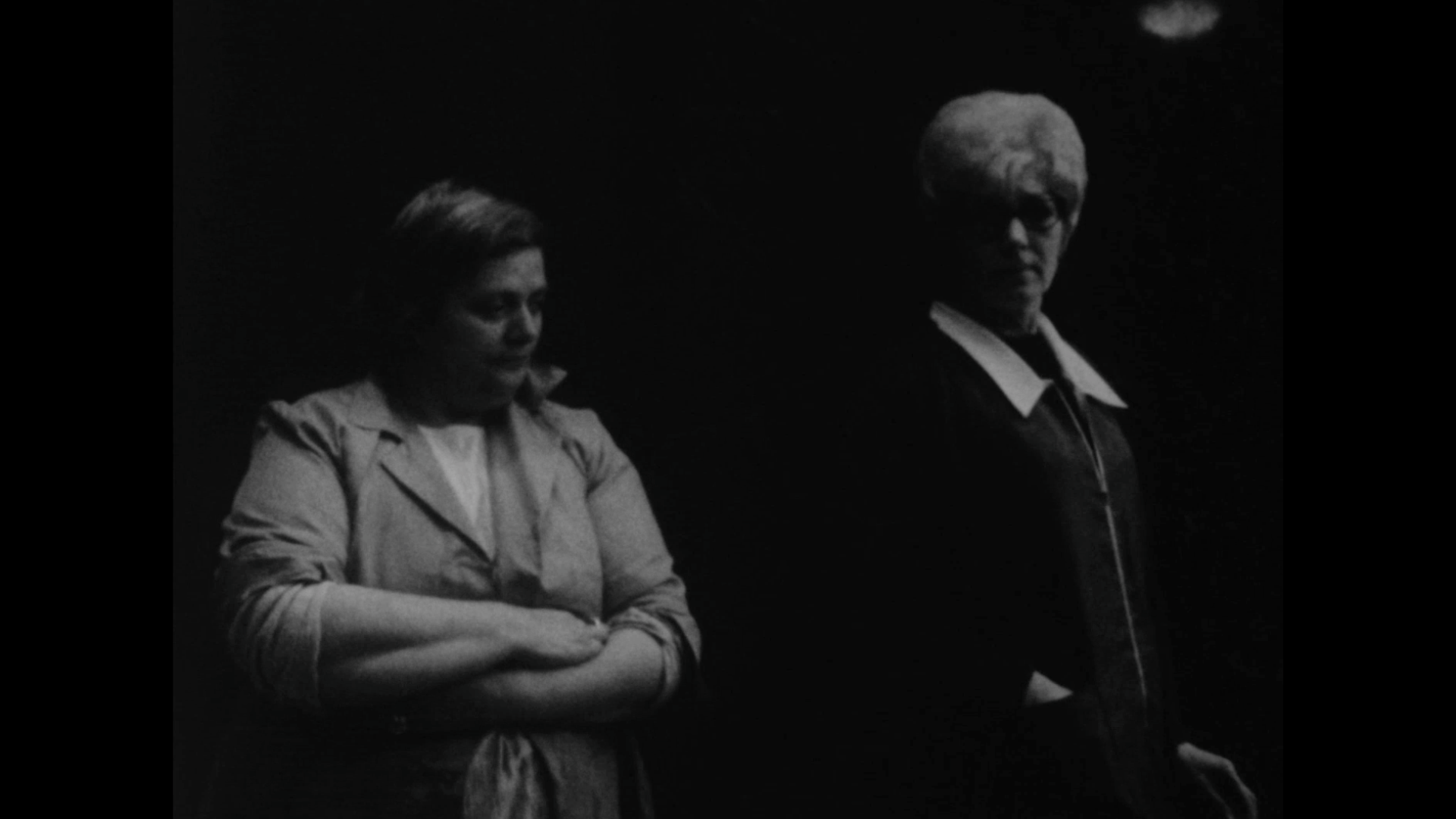
Image from Nightcleaners (1975)
The sense in which these women live somehow apart from the rest of the world, above and beyond it, is reflected in a recurring image of office blocks at night. In this arresting visual metaphor, a dark towering mass is broken only by a one or two lit windows, through which we see women working, lone illuminated figures in a mass of concrete and glass. The nightcleaners operate in a kind of underworld, cut off from mainstream, sun-lit society. Their labour, hidden by darkness, invisibly sustains our parallel daylight existance, within which the women find themselves operating as second class citizens – too exhausted to participate fully in the “real” world.
Nightcleaners is full of numbers. There’s the £12 a week the cleaners are paid for punishing hours (10pm-7am), and the two weeks one woman is prepared to wait to see if a hoped for pay rise goes through. Three to four hours of unbroken sleep is what one woman requires in order to function after a shift (another frequently manages on one and a half). There’s the 49 offices and nine toilets, which the women are expected to clean. These numbers are emphasised by a counting song on the soundtrack, which works its way up the times table. The song’s ever irresistible upward logic – ascending from “1x1= 2” to “16x16= 32” – seems almost to mock the women on screen, whose push for fair pay remains stubbornly stuck, frozen at poverty wages.
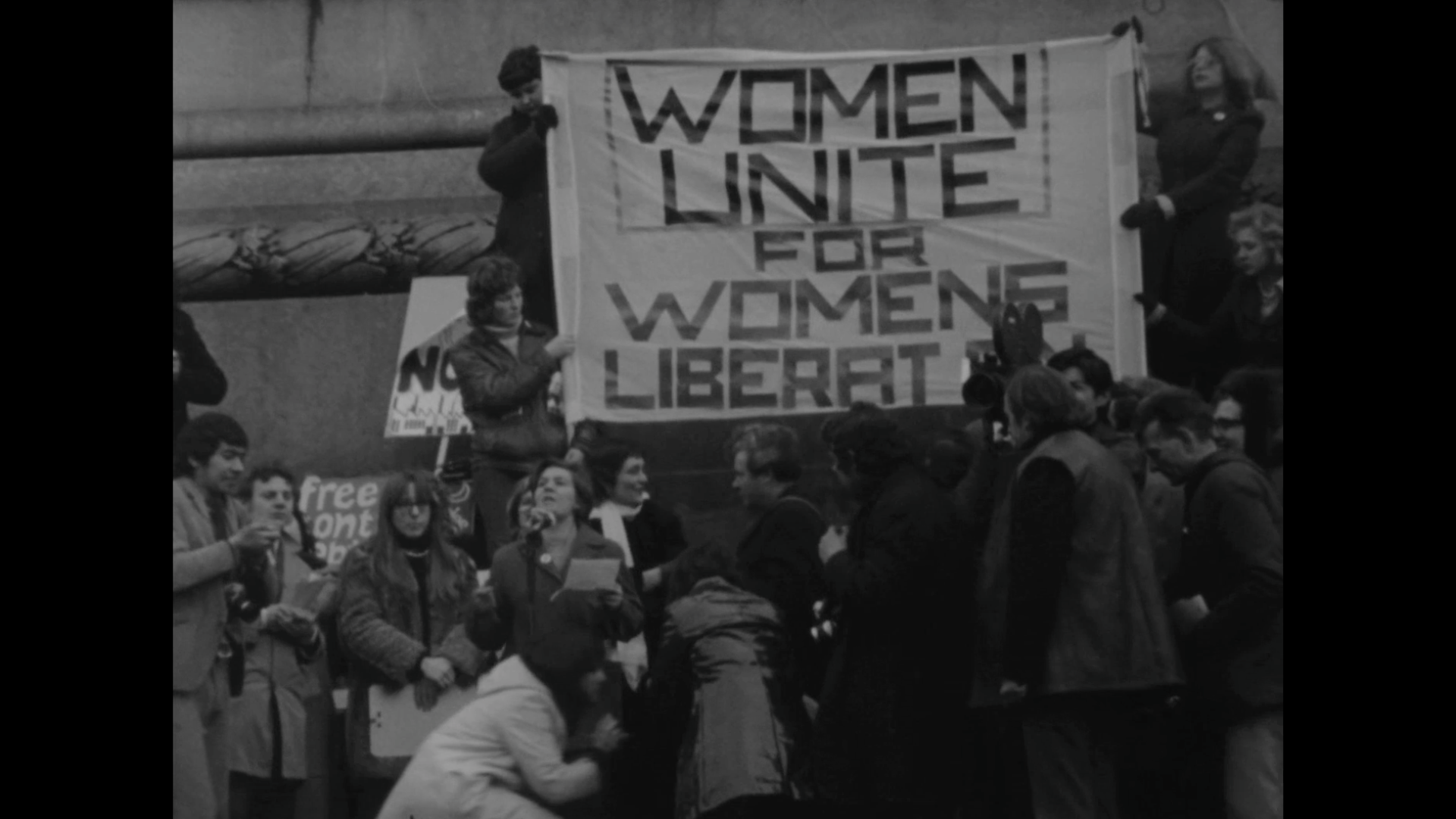
Image from Nightcleaners (1975)
Of course, what Nightcleaners demonstrates is that lives cannot be measured in numbers, no matter what the cold figures of management accounts might suggest. The cost of night work is written on the bodies of these women, prematurely aged by endless double shifts – days spent raising kids, nights spent cleaning office blocks. It’s reflected in broken marriages, relationships crushed by an exhaustion that keeps you always at arm’s length from the daylight world. One woman says she gave up night shifts for a while, after being told by doctor that the work was killing her. "A lot of people say your health is more important than money but you can't live without it," she says, resigned. “If I’m going to die, I might as well die happy, mightn’t I? So I’m back…” Happy how, we wonder, as the camera lingers on her fatigued face, zooming in on eyes, ringed with deep shadows. Yet, part of the power of Nightcleaners is that it humanises the cleaners, showing them as rounded people rather than victims. Later, the same woman appears walking around with her children, her face still tired, but this time lit up with joy. Despite all this hardship, she perseveres, striving to find some kind of happiness, amidst the ruins.
Watching Nightcleaners today, the parallels between this onscreen injustice and our current neo-liberal hellscape are clear. The details may differ – nowadays it’s ruthless tech monopolies and mass-market AI which pose the biggest threat to the contemporary worker – but the psychological and political reality of precarious work remains recognisably similar. Recent films about the alienation of the modern worker – from Laura Carreira’s On Falling (2024) and Ken Loach’s Sorry We Missed You (2019), both fiction features which explore the social implications of the gig economy, to documentaries such as Union (Stephen Maing and Brett Story, 2024), about a group of Amazon warehouse workers struggling to unionise – have vividly captured the reality of working in the jaws of late-stage capitalism. Yet, still, many decades after the Berwick Street Collective first picked up their cameras and turned them on London’s night cleaners, their film remains poignant, revelatory and ambivalent – inspiring, by turns, both hope and despair.
Rachel Pronger is a writer and curator, and co-founder of archive activist feminist collective Invisible Women.
Commissioned to accompany Cinetopia’s 10th December screening of Nightcleaners (Part 1) at Edinburgh Filmhouse, marking the film’s 50th anniversary, and followed by a panel with members of the Berwick Street Collective hosted by Dr Kirsten Lloyd. More information and to purchase tickets here - https://www.filmhouse.org.uk/movie/nightcleaners-qa/
